
Root Canal
During a root canal procedure, the inflamed or infected pulp, which can be thought of as the tooth's living core, is removed to alleviate pain and prevent further infection. It's like clearing out an aching bruise from within the tooth. Then, just as you would thoroughly clean and fill a small cavity, the canal is carefully cleaned and shaped, followed by filling and sealing the space to safeguard the area. Dr. Oyama will skillfully craft a crown to cover, protect, and restore the tooth, keeping it healthy and strong for many years to come.
Root canal procedure is preferred over extraction because it is always better to maintain a healthy, natural smile whenever possible. Studies have shown that root canal treatments have a much higher success rate than extractions, with fewer complications. For instance, this 2023 study in Clinical Oral Investigations found a 97% tooth survival rate over 10 years. Extracting and replacing a tooth involves more time, expense, and risks that can affect neighboring teeth and supporting gums.
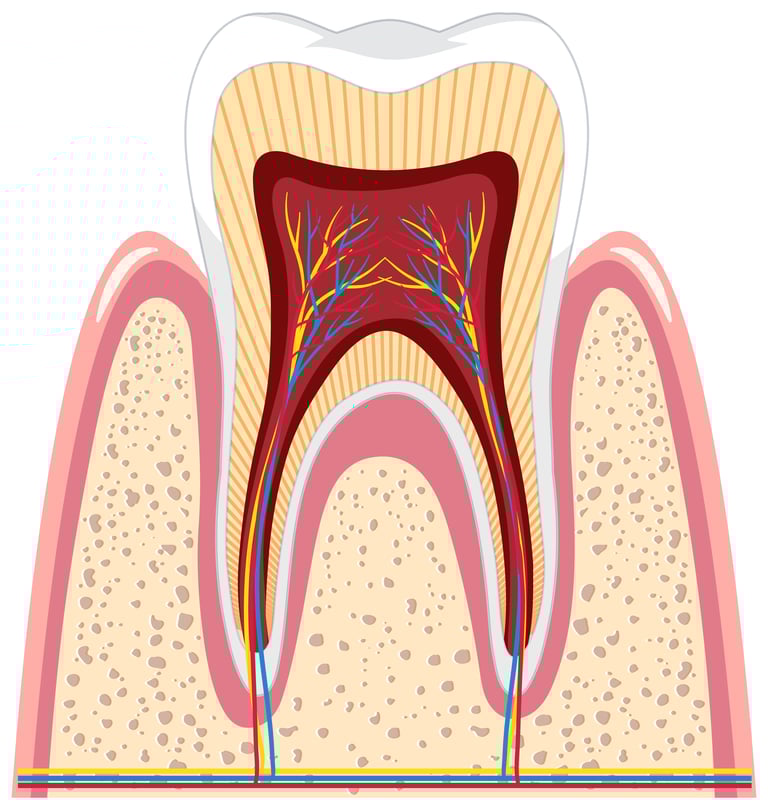
The tooth illustration shows that, inside the tooth, under two hard layers (enamel and dentin), there is a soft tissue called the pulp.
In its early years, the tooth's pulp is a nurturing center, vital to its growth and development. Yet as the tooth matures, the pulp gracefully steps back, having completed its mission, allowing the tooth to thrive independently for a lifetime.
When damage or decay extends deep into the pulp, the best practice is a root canal.
These symptoms may indicate you require a root canal procedure.
Dr. Oyama takes great pride in her ability to complete a root canal in one appointment, made possible by her skill and on-site cutting-edge technology.
A chipped or cracked tooth
Lingering sensitivity to hot or cold
Dark gums under a tooth, or deep decay
Tender, swollen gums
Pimples on the gums.
Severe pain while chewing or biting.

Contact
Call
© 2026. All rights reserved.
Address
25775 McBean Parkway Suite 207
Valencia, California 91355